Constructing OpenFlexure Microscope - Engineering Through Flexibility
We had an exciting hands-on session on the Day-2 of the ICTS-SSWP 20261 program where we built an OpenFlexure Microscope from 3D-printed components. Rather than simply using a scientific instrument, we were able to understand how it is designed and assembled, giving us a deeper appreciation of the engineering behind modern scientific tools.
What makes the OpenFlexure Microscope fascinating is its unique mechanical design. Traditional microscopes often rely on precisely manufactured gears and sliding mechanisms to achieve the fine movements required for focusing. However, producing such high-precision components using low-cost 3D printing can be challenging.
To overcome this problem, the designers of the OpenFlexure Microscope took a different approach. Instead of depending on gears and sliding parts, the microscope uses flexure mechanisms - structures that achieve motion through the controlled bending of material. This design makes use of the natural flexibility of plastic, allowing for precise and repeatable movement without requiring complex mechanical assemblies.
The components we assembled were printed using PLA (Polylactic Acid) filament, one of the most commonly used materials in 3D printing. Despite being made from relatively simple materials, the completed microscope is capable of performing precise adjustments, demonstrating how creative engineering can often compensate for manufacturing limitations.
Beyond its innovative design, the OpenFlexure Microscope is also an excellent example of how open-source projects can make scientific tools more accessible. As an open-source project, all of its designs, documentation, and software are freely available, allowing anyone to build, modify, and improve the microscope according to their needs.
Apart from the classroom, this project has wide applications. OpenFlexure Microscopes have been used in educational settings around the world and have even found applications in healthcare, including malaria diagnosis in resource-constrained regions. By significantly reducing the cost of scientific instrumentation, projects like these help make science more accessible to students, educators, and researchers who might otherwise lack access to expensive lab equipment.
Building the microscope ourselves was both challenging and rewarding. The session showed us that scientific instruments are not merely tools to be used - they are a result of thoughtful design, innovation, and collaboration. It was inspiring to see how a simple idea, combined with open-source principles and modern manufacturing techniques, can create a technology with a real impact on education and healthcare.
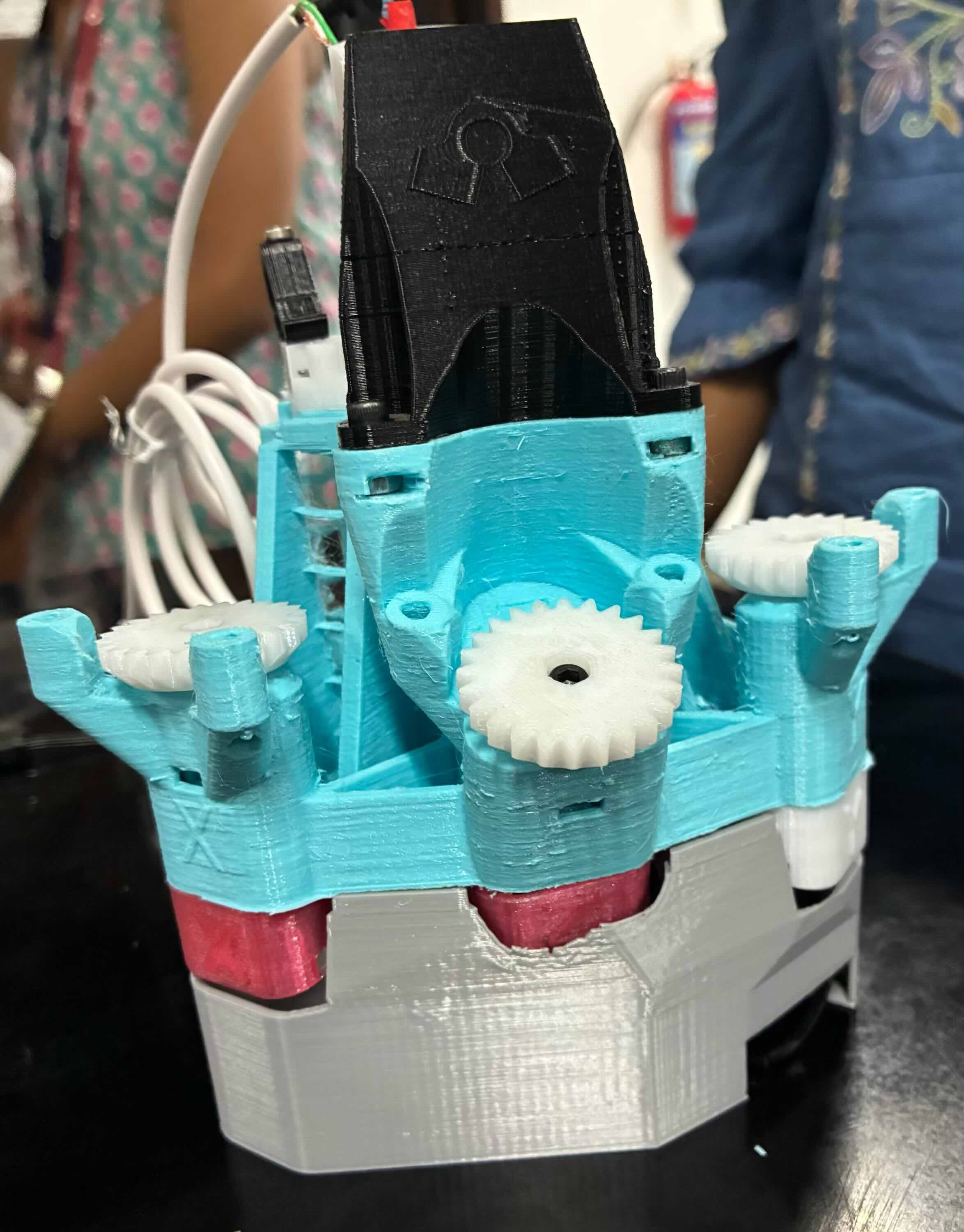 The OpenFlexure Microscope that we built